More Than a Formality: Why the USPTO’s 2026 Design Patent Guidance May Matter for AR, VR, Holograms, and the Next Decade of Interfaces
On March 13, 2026, the U.S. Patent and Trademark Office issued supplemental guidance[1] that should make it easier to seek design patent protection for computer-generated interfaces, icons, and other digital visual designs. At first glance, the guidance appears to make only a narrow procedural change: the Office removed the prior examination requirement that applicants depict at least a portion of the computer, display, or screen in solid or broken lines when claiming a graphical user interface (GUI) or icon. In practice, that requirement often amounted to little more than a dashed-line box around the claimed design. Applicants may now simply depict the icon or interface itself.
While this seems like just a formalistic change, the concerns that prompted it, and it’s implications for emerging technologies, are more significant. In preparing the guidance, the USPTO reached out to applicants, practitioners, and academics, and received a wide array of comments regarding “screen-less” display technologies. The comments reflect a broader concern that emerging display technologies, such as projections, holograms, and virtual and augmented reality systems, do not fit neatly within a framework that treats digital designs solely as surface ornamentation on a conventional display screen. As those technologies mature, a more flexible approach to design patent protection becomes increasingly important. Given that design patents are in force for 15 years from the date of grant[2], a doctrinal adjustment that better accommodates emerging display technologies is both timely and welcome.
The practical implications are especially significant for companies developing technologies in which the user interface is not neatly confined to a conventional display screen:
Augmented reality and virtual reality. In AR and VR systems, value often lies not simply in the fact that information is displayed, but in how digital elements are positioned and behave in relation to physical or virtual space. Placement, layering, stylization, and motion may become core product differentiators. The USPTO’s updated framing therefore supports a more natural way of thinking about these interfaces as designed visual experiences embedded in a broader environment.
Heads-up displays and automotive interfaces. Heads-up displays in vehicles, aircraft, industrial equipment, and wearables present information within the user’s field of view rather than solely on a conventional screen. In these contexts, the interface may be functionally integrated with real-world activity while still carrying distinctive visual design choices. The guidance better aligns design patent practice with that reality by recognizing that the relevant interface may be experienced as part of a system, not merely as something framed within a traditional display.
Projection-based interfaces and projection mapping. Some emerging systems project controls, icons, or other visual elements onto surfaces, objects, or surrounding environments. In those settings, the projected appearance itself may be central to the user experience and to product identity. The notice’s express discussion of projections suggests that the USPTO is prepared to treat these designs as more than doctrinal edge cases, which may be particularly important as projection-based interaction becomes more common in consumer and industrial applications.
Holographic and other volumetric or pseudo-volumetric interfaces. Holographic and related volumetric display technologies remain at an early stage, but design patents are long-lived rights. A design patent filed today may still have value many years from now, when these interface paradigms may be more commercially mature. For that reason, the guidance is significant not only for current products, but also for companies seeking to build forward-looking portfolios around interface technologies that may become more important in the 2030s.
This guidance does not abolish the article-of-manufacture requirement or guarantee protection for every free-floating digital visual effect. The notice remains tethered to the requirement that the design be for a computer, computer display, or computer system, and ordinary disclosure rules still apply.
Illustrative Claiming Examples from the Guidance
The guidance is also useful at a more concrete level: it provides several examples of claim formats that do and do not satisfy the article-of-manufacture requirement, and is helpful for understanding the boundaries of the new doctrine. In particular, when a portion of a display is not illustrated, the title, claim and description should make it clear that the design is not merely a disembodied picture, but an icon for a computer:
Example 4 (complies with 35 U.S.C. §171)[3]:

Title: Paper stack icon for a computer display screen.
Description: The figure is a front view of a paper stack icon for a computer display screen showing the new design.
Claim: The ornamental design for a paper stack icon for a computer display screen as shown and described.
Example 5 (does not comply with 35 U.S.C. §171)[4]:
Title: Paper stack icon.
Description: The figure is a front view of a paper stack icon showing the new design.
Claim: The ornamental design for a paper stack icon as shown and described.
Example 6 (complies with 35 U.S.C. §171)[5]:
Title: Projected paper stack icon for a computer.
Description: The figure is a front view of a projected paper stack icon for a computer showing the new design.
Claim: The ornamental design for a projected paper stack icon for a computer as shown and described.
As shown from the above examples, compliance with the requirement rests on whether the application is directed to a design for an article of manufacture, as opposed to the design itself. The guidance provides examples of claim language that support this determination, including: “computer screen with an icon,” “display panel with GUI,” “display screen or portion thereof with icon,” “portion of a computer screen with an icon,” “portion of a display panel with an icon,” “portion of a monitor displayed with an icon,” “icon for display screen,” “GUI for display panel,” “projected interface for a computer,” “virtual reality interface for a computer,” “augmented reality interface for a computer” and “computer icon,” but notes that this list is not exhaustive[6].
Although many of the examples use display-specific formulations (e.g. “computer screen” or “display screen” vs. “projected interface” vs. “virtual reality interface”), the guidance also includes an example that is more generally directed to a computer interface:
Example 9 (complies with 35 U.S.C. §171)[7]:
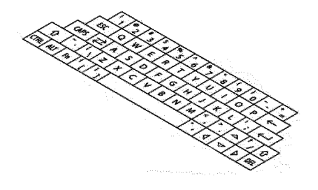
Title: Graphical User Interface for a computer.
Description: The figure is a front view of a graphical user interface for a computer showing the new design.
Claim: The ornamental design for a graphical user interface for a computer as shown and described.
Notably, Example 9 uses the broader formulation “graphical user interface for a computer” and is identified as compliant even though it does not specify the type of display. That example suggests applicants should consider whether broader, technology-agnostic language may preserve flexibility where an interface could be deployed across multiple computing environments.
Conclusion
Although the USPTO’s March 2026 guidance may appear procedural at first glance, its implications are broader. By relaxing the requirement that digital interfaces be depicted as tied to a conventional screen, the Office has signaled a more flexible approach to design protection for technologies such as augmented and virtual reality, heads-up displays, projections, and holographic interfaces.
For companies developing software, immersive systems, automotive displays, wearable technologies, or other visually driven products, that shift is worth attention. As interface design becomes an increasingly important competitive asset, and as design patents remain enforceable for years, businesses should consider whether emerging visual features deserve protection now rather than later.
Applicants and practitioners should revisit existing filing strategies, particularly where prior assumptions about display-bound interfaces may have excluded valuable subject matter. Companies developing distinctive digital experiences across traditional and nontraditional display environments may find new opportunities to build meaningful design patent coverage. If your team is developing distinctive user interfaces, icons, digital workflows, or other visual product features, now is an excellent time to reassess your design patent strategy. For help evaluating whether the USPTO’s updated guidance creates new filing opportunities, refining claim and title language for pending matters, and building a practical protection plan that fits alongside your broader product and IP roadmap, please contact partner Daniel Rose, Intellectual Property Department at daniel.rose@pierferd.com.
This publication and/or any linked publications herein do not constitute legal, accounting, or other professional advice or opinions on specific facts or matters and, accordingly, the author(s) and PierFerd assume no liability whatsoever in connection with its use. Pursuant to applicable rules of professional conduct, this publication may constitute Attorney Advertising. © 2026 Pierson Ferdinand LLP.
[1] “Supplemental Guidance for Examination of Design Patent Applications Related to Computer-Generated Interfaces and Icons,” 91 FR 12394 (USPTO, March 13, 2026), available at: https://www.govinfo.gov/content/pkg/FR-2026-03-13/pdf/2026-04987.pdf
[2] 35 U.S.C. §173.
[3] 91 FR at 12400.
[4] Id.
[5] Id. at 12401.
[6] Id. at 12397.
[7] Id. at 12402.